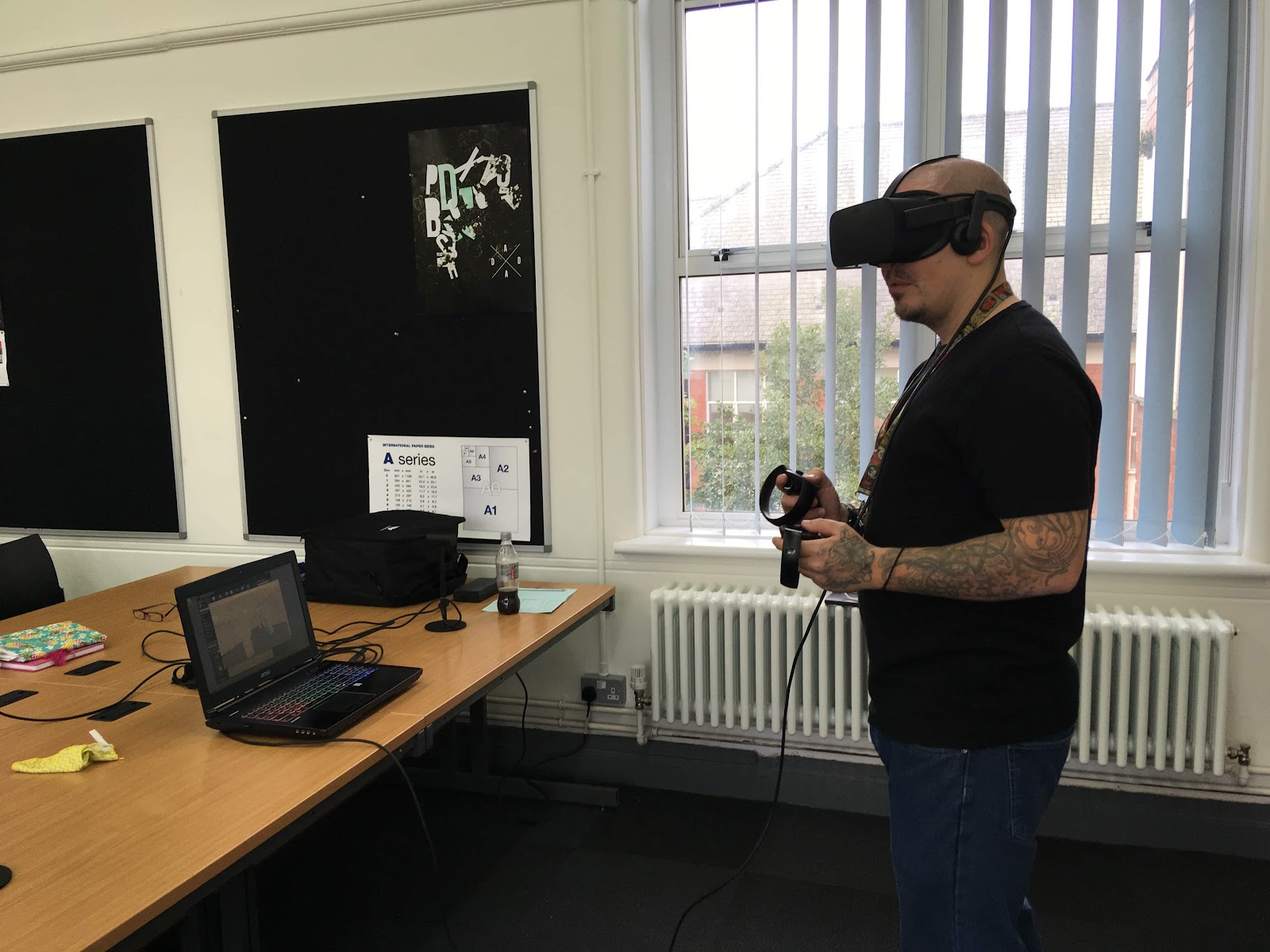
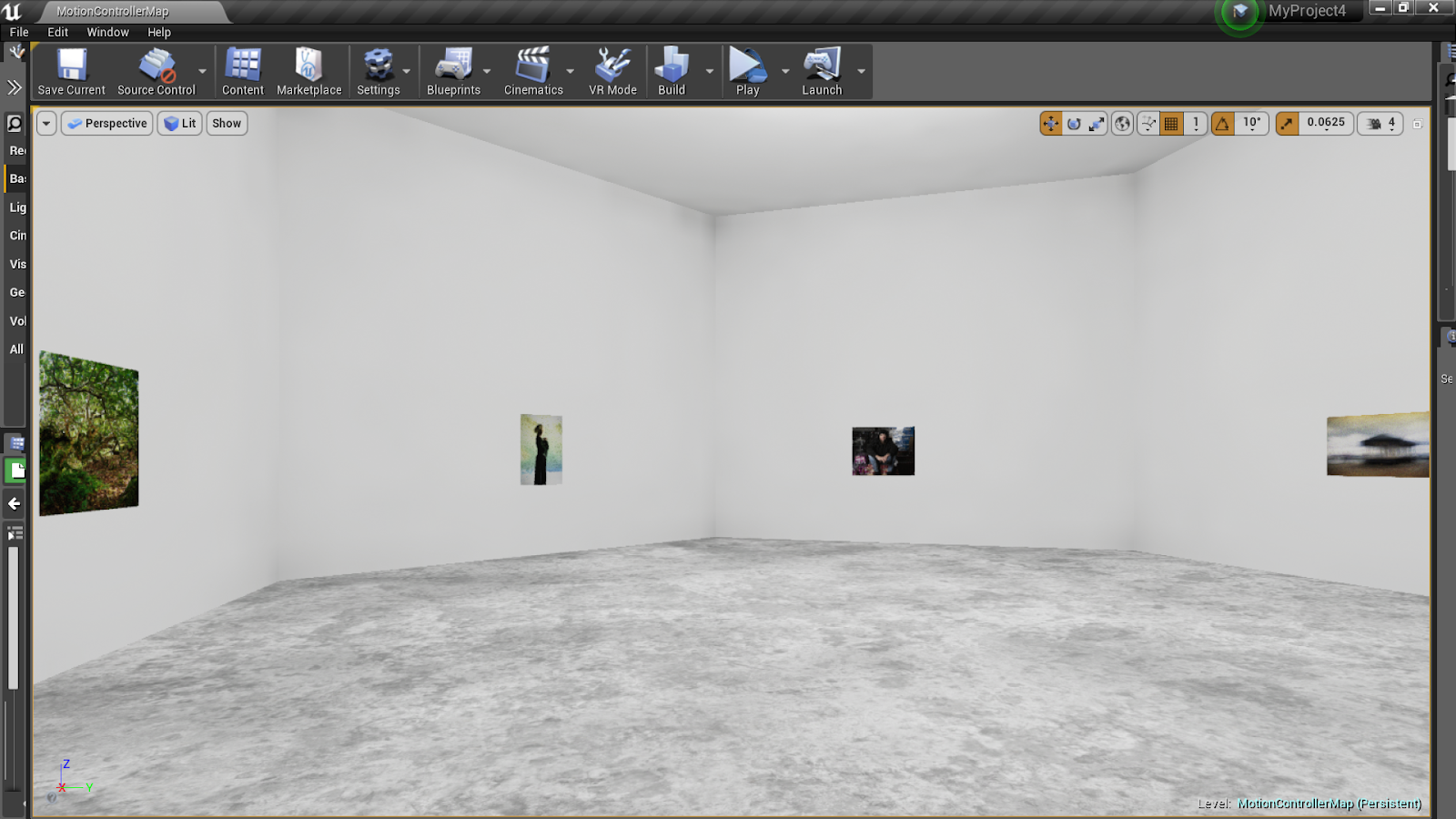
Wednesday, 12 December 2018

The VR Museum of Fine Art

It was recommended that I had a look at The VR Museum of Fine Art. This museum brings together artefacts and/or works of art, of vastly different type and scale, from across the planet, and displays them in one place.


The museum allows the viewer to experience the scale and textures of works of art up close. In their own words, "No rope barriers or glass walls here. Feel free to explore the artwork however you see fit. Roomscale VR lets you walk around, duck under, and even hug the life-sized figures".

David by Michelangelo displayed at the Galleria dell'Accademia, Florence, Italy is an example I used in an earlier post about the scale of artwork and here it is, displayed at life size for the VR visitor to walk around and it is placed close to more natural sized sculptures which give one a great sense of scale.


There are a couple of things that affect the experience. One being the resolution of some of the sculptures captured through photogrammetry. Most of the detail is incredible but a couple are a bit woolly and I think lets it down a little as you can be completely immersed by one object only to have that illusion shattered by the next. But I am being very picky here.


Some of the detail and resolution is a little woolly...


... but most is fantastic.

This is yet another VR gallery that has introduced furniture as well as a low murmuring 'museum' sound in an to attempt to make the experience feel more like going to a real museum..! Why? I am sure that for some people, metal detectors, reception, cafe and hushed sounds can be quite off-putting and quite the opposite to a relaxed and casual visit to the museum, certainly in the current climate of anti terror measures the we have to negotiate to access a public building. So why are people designing the galleries like this.


I am being a little unfair, for this gallery does a couple of things that I really like. For example The Great Buddha of Kamakura is presented (in a slightly stereotypical way) outside on a snowy mountain side which, in the real world, would be a physical impossibility.


The museum exhibits a number of paintings and the detail and resolution of them is a really high quality and because this is VR, you can go right up to the pieces and see the individual brush strokes!


I like this gallery/museum because it shows us a way forwards with regards to bringing diverse and widely spread artefacts together, into one space for direct comparison. It also demonstrates how detailed and life-like the experience can be/should be and I personally like the fact that the quality of the photogrammetry/reproduction has taken precedence over the experience as a whole... which is as it should be?

The VR Museum of Fine Art is available for free download through Steam - https://store.steampowered.com/app/515020/The_VR_Museum_of_Fine_Art/

If you are reading this blog and feel you can add something to my research then please comment… even if you are correcting me or don’t agree with something that I say.

Wednesday, 28 November 2018

Gathering Data at UCAS (S3)

I presented my VR gallery at the Manchester UCAS, Create Your Future fair as part of Blackpool and The Fylde College's promotional stand. This allowed me to present the gallery to a large and relatively broad range of people and gather some useful data.


The data I was mainly looking for concerned the experience versus the content of the gallery. My thinking being that if people are overwhelmed by the experience then they are not necessarily going to look at the artworks objectively... or do they?

I asked three main questions - Have you been exposed to a VR experience before? What did you think of the experience? and What did you think about the [art] work? 

I had 45 good responses split equally between those who had been exposed to VR and those who had not. The initial results possibly supports my original thoughts, as people who had never used VR before tended to rate both questions differently and rated the artwork consistently lower than the experience, whereas people who had used VR before rated both questions equally.

The artworks included in the gallery are a selection of the best images produced by our students and included a recreation of an exhibition of photography by Sean Conboy, an internationally successful architectural photographer. The images are arguably good ones and the experience of visiting a gallery, should never be greater than the artworks! Which ia the reason I have come to my initial conclusion

I am afraid I didn't take any photographs of the visitors interacting with my VR setup as it was quite busy.

Findings
The immediate problem, with this fairly new technology and highlighted by the focus group, is that not many people have had previous experience in it and those that haven't may not give an objective and thoughtful response to any questions about it. This may be because they are in awe of the technology and may be blind to the content and may not be able to give meaningful feedback and data on which to base an accurate conclusion.

This was the first issue to address, so a VR gallery was prepared, accurately based on the Blackpool and The Fylde College (B&FC) gallery and high quality photographs by a well known international and professional photographer were exhibited in the space, in an exact replica of an exhibition held in December 2017.

The Gallery was presented at the UCAS, Create Your Own Future, fare at Manchester (November 2018) and the participants were asked three main questions: on a scale of one to four - Have you been exposed to a VR experience before? What did you think of the experience? and What did you think about the [art] work?

There were 45 good responses split equally between those who had been previously exposed to VR and those who had not.

The results showed that people who had never used VR before tended to rate both questions differently and rated the artwork consistently lower than the experience, whereas people who had used VR before rated both questions equally.

The artworks included in the gallery are a selection of the best images produced by B&FC students and a recreation of an exhibition of photography by Sean Conboy, an internationally successful architectural photographer. The images are arguably good ones and the experience of visiting a gallery, should never be greater than the artworks, which is the reason for the conclusion.

This initial hurdle was overcome with the inclusion of the question, have you experienced VR before, in subsequent questionnaires during this project. Also, it was decided to set up a subdivision of the focus group that was to be exposed to VR to a greater extent than the others. This group was called the ‘immersive group’ and could be relied upon to have ‘got over’ the initial experience of VR because they were ensured to be exposed to it more.

If you are reading this blog and feel you can add something to my research then please comment… even if you are correcting me or don’t agree with something that I say.

Sunday, 25 November 2018

The Museum of One Painting


(http://www.russianmuseums.info/M1574)

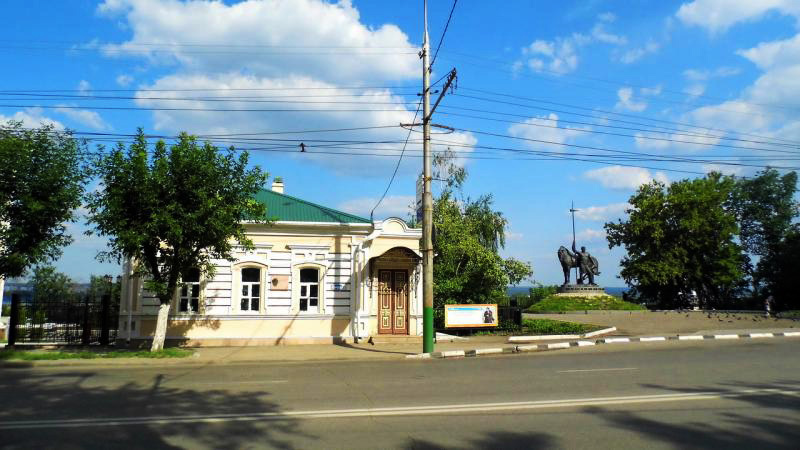
The Museum of One Painting is based in the Russian city of Penza and does as its name suggests - exhibits only one painting at a time. Set up in 1983, the gallery was setup to encourage people to ‘study and experience [paintings] in a relaxed way’ (Greenberg, 1996), as opposed to the usual overwhelming experience of a gallery filled with hundred of pictures.


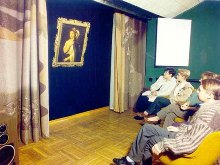
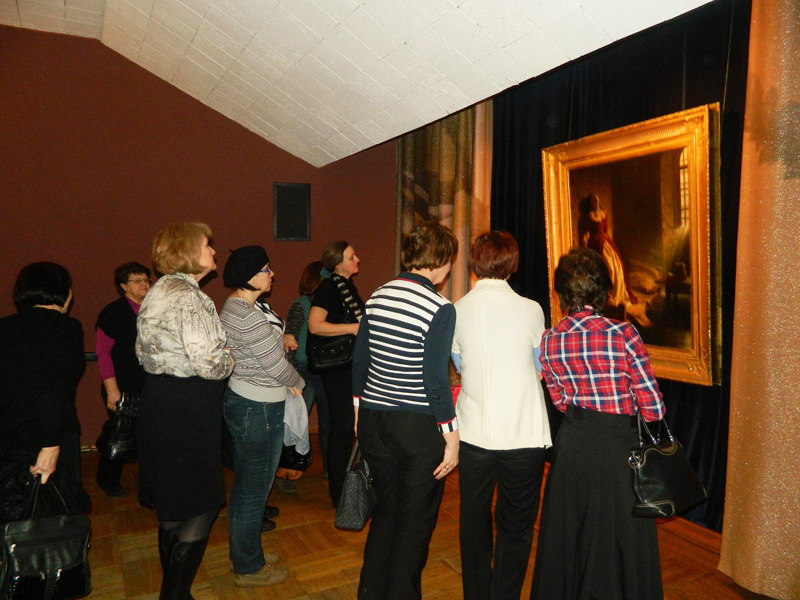
To visit the gallery, one must buy tickets in advance and leave coats and bags in the cloakroom. This is to prepare the visitor for the experience, to help them leave the stresses and influences of the outside world behind. Before the painting is rather dramatically revealed from behind a curtain, the audience watch a 40 minute film about the picture. The idea is that ‘the exhibition of a single work produces a greater emotional impact on the visitor’ (Greenberg, 1996).


(http://www.russianmuseums.info/M1574)

So what has this got to do with a VR gallery?

At the moment the viewer, in a VR environment, has a rather lonely experience... which is actually great for viewing and contemplating artworks. In his book, Inside the White Cube, Brian O'Doherty discusses (in a rather tongue-in-cheek way) the idea of the ideal gallery as that which 'subtracts from the artwork all cues that interfere with the fact that it is art. The work is isolated from everything that would detract from its own evaluation of itself' (O'Doherty, 1999) and according to O'Doherty, this includes people!

O'Doherty goes on to talk about the photographic 'installation shot' as describing the perfect viewing experience, but this time devoid of the viewer! '...eyes and minds are welcome, space occupying bodies are not... ...you are there without being there - one of the major services provided for art by its old antagonist, photography' (O'Doherty, 1999).

I think this also describes the VR viewing experience quite well. Certainly in my gallery, the viewer is disembodied and is only accompanied by a single floating hand (that is very much attached to reality and its accompanying human body). One has to remember that ultimately, this experience is all about artworks and the ethereal power they embody and the historic power they imbue in a space specially set aside to show them... which it turn can empower/elevate (potentially) any object into a work of art.

I think it is safe (for me) to say that these ideas have hugely influenced my thoughts on galleries and the framing and placing of artworks over the years and VR has allowed me to enact upon and test them in a version of reality.

In Daniel Buren's Function of Architecture note, A Bit of Bread, explains this concept well(ish) -
An empty museum or gallery means nothing, to the extent that it can any time be transformed into a gym or a baker's, without changing what will take place there or will be sold there, in terms of works of art in the future, since the social status will also have changed. Placing/exhibiting a work of art in a baker's will in no way change the function of the aforementioned baker's, which will never change the work of art into a bit of bread either.
Placing/exhibiting a bit of bread in a museum will in no way change the function of the aforementioned museum, but the latter will change the bit of bread into a work of art, at least for the duration of its exhibition.
Now let's exhibit a bit of bread in a baker's and it will be very difficult, if not impossible, to distinguish it from the other bits of bread. Now let's exhibit a work of art -of any kind - in a museum: can we really distinguish it from other works of art? (Greenberg, 1996).
...these notes/writings/discourses always seem to end with open questions!

Greenberg, R. Furgusen, B. Nairbe, S. (1996). Thinking About Exhibitions. Routledge.
O'Doherty, B. (1999). Inside the white cube. Berkeley: Univ. of Calif. Pr.

If you are reading this blog and feel you can add something to my research then please comment… even if you are correcting me or don’t agree with something that I say.

Friday, 9 November 2018

The Gallery

I have been working on a recreation of Blackpool and The Fylde College's gallery. This will enable me to directly compare a VR model to the real thing and allow me or my students to utilise it to help design future exhibitions. Such an opportunity has presented itself this coming February and I will post here with screen shots, images and feedback as to its success.

The exhibits in the VR gallery are the same images that are currently exhibited in The Gallery and are by commercial and advertising photographer, Jonathan Beer. Which is great for comparison.

I will add a little more detail to the VR facsimile as I go, but for now, the aim is to attach it to the showcase gallery due to be presented at UCAS, Manchester at the end of this month.


If you are reading this blog and feel you can add something to my research then please comment… even if you are correcting me or don’t agree with something that I say.

Friday, 2 November 2018

Ikonospace (Beta) Test (S4)

An immersive group was made up of three individuals, taken from the focus group. This group was to be exposed to VR more than the rest of the group. So any software or ongoing technical testing of VR equipment, would be sent their way. The first piece of software that they were asked to test was Ikono Space (https://www.ikonospace.com/), an exhibition design and visualisation software and for this project, came along at just the right time.

Having identified that usability and accessibility would be a major hurdle to overcome if VR technology was to be included as a fine art resource in university, we needed to test the usability of Ikono Space's gallery building software. We wanted to see how people who do not have a technical background in 3D design and represent a good majority of B&FC creative art students, learned and utilised Ikonospace (for the first time) to create a gallery for a piece of their own work. We have to put this in the context of Unreal Editor 4 or Maya that are both fairly complex pieces of software and can be overwhelming for someone who has never used it (or any 3D design software) before.
The field test was designed to see how people who do not have a technical background in 3D design learned and utilised Ikonospace (for the first time) to create a gallery for a piece of their own work. This has to be put in the context of Unreal Editor 4 or Maya that are both fairly complex pieces of software and can be overwhelming for someone who has never used them (or any 3D design software) before.

The three participants were asked to use Ikono Space to create an exhibition space, without any technical help for a single piece of their own work and save the results., Each student spent about an hour each on their designs. They helped each other to work out how to use it and used a video tutorial, made by Ikono Space to help get them started. Their finished galleries were appraised and a discussion recorded their thoughts and feedback.

Each student spent about an hour each on their designs, but they helped each other to work out how to use it. They used a video tutorial, made by Ikono Space to help get them started. They encountered a couple of minor issues such as; centering and spacing their artwork across the walls and difficulty with selecting closely placed objects. Ikono Space displays a live view of the artwork-to-wall coordinates including a 150cm centreline, which is fairly helpful, but I think the students wanted a function that automatically centers and spaces the artworks across the wall.

After a couple of initial problems with saving and viewing one of the galleries, the students were able to (quite quickly) put together some recognisable and effective gallery spaces.

Each participant was able to master the software’s basic functions fairly quickly and build some fairly creative spaces and its user interface was best described as being similar to The Sims video game.

The conclusion is fairly positive, especially when you look at the results, which can only develop and get better with repeated use. Below are screenshots Ikonospace allows you to capture and download...

Helen
 

Nikki


Carl


The software allowed Nikki and Carl to add personal design features such as a purple floor and benches and chairs and there are a couple of interesting similarities between all three students' spaces such as the use of an approach space or corridor that leads into the main gallery and they all added furniture.

Carl seemed to be the most confident user this shows in his more complex design decisions such as the height of the walls, extra images and his use of the corridor as an extra exhibition space.

I am looking forward to seeing and hopefully using Ikonospace Pro when it is released.

If you are reading this blog and feel you can add something to my research then please comment… even if you are correcting me or don’t agree with something that I say.

Friday, 19 October 2018

The Kremer Museum

The visionary for the Kremer Museum sees this gallery 'as merely the beginning of an entire new way for people to experience art across the world' (https://www.artsy.net/article/artsy-editorial-new-museum-exists-solely-vr-future). The gallery allows the visitor to view and interact with George Kremer's collection of Dutch and Flemish masterpieces. They used photogrammetry to map the objects realistically and at a high resolution. The interactivity allows the viewer to see the back of the paintings, X-ray versions and a holographic expert will appear by certain pictures to explain their history and importance.


However, just like other VR galleries and whilst this one makes use of fantastic architecture and interactivity, it still feels like it is constrained by tradition. But the overall concept is a great step forward and the idea that people can now experience these paintings from across the globe has potential... although not without criticism, specifically about the direction of cultural flow, which is an interesting argument, but not one that is part of this project's goal (at the moment). Read the original article here.

Joel Kremer talks about being discouraged by the high cost of a 'bricks and mortar' for building a real gallery. This article on the Financial Times' website talks about the same
issue...  https://www.ft.com/content/ea0a12fa-dfee-11e7-a0d4-0944c5f49e46

Photogrammetry is something I want to investigate as it would allow me to include sculpture and more three dimensional pieces in the study. I am looking at collaborating with some L5 Photography students to try an make this happen. Watch this space...

Edit (28/12/18): I finally got round to downloading and viewing the gallery. I would not change anything that I have already stated above, however I would like to add a couple of thoughts. Firstly, the space is impressive. It uses expansive architecture that directs you towards the paintings. Each of the paintings is given its own space and 'ideal' viewing distance that reduces the distraction of nearby paintings. Now, the most fantastic element of this gallery, and obviously where most time (money?) has been spent, is in the incredible resolution and surface texture of each of the paintings. You can examine the paintings at an almost scientific detail. This is exemplified by Rembrandt's copper plates; they reflect the light very accurately, even to the point of reversing out when viewed obliquely. For people who are studying this era of painting, this gallery represents an unbeatable resource, especially if it is not practical for you to examine the original.

If you are reading this blog and feel you can add something to my research then please comment… even if you are correcting me or don’t agree with something that I say.

Saturday, 13 October 2018

First Use for Pre-Visualisation

The next creative arts based UCAS fair is on the horison and B&FC, School of Creative Arts has hired a space. We have two design ideas and we are not sure how they compare in terms of impact. So... I thought I would take the chance to experiment and demonstrate the potential usefulness of the technology in pre-visualising how art works (or design ideas in this case) impact within a particular space.

I will demonstrate it in the near future and I am looking forwards to the initial feedback on the use of VR in this context. Screen grabs of the two different designs that are presented side-by-side in the simulation...


Edit: The shape of the space is different from the one I originally worked on... So here is the updated spaces -


Edit - 29th Nov 2018.
A photograph of the final set at UCAS...

Friday, 12 October 2018

IKONO SPACE

One thing that has bothered me since the start of this project, is one of usability. How can students easily and actively use VR software and hardware to pre-visualise their work in a gallery space.

I have been using Unreal Engine to create my initial virtual gallery test spaces and it has taken me quite a long time to learn how to use it at its most basic level. However, I am not sure that all (if any) fine art or photography students will want, or have time, to learn how to use this software and this could be a mayor stumbling block in implementing this technology.

It seems that I am not the only one to have thought about this and I recently came across IKONO SPACE. They are a company that is creating a piece of software specifically to design and curate virtual reality galleries. They allow you to download a beta version of the software and I recently had a play with it. And, I am fairly impressed with its usability, which uses a similar interface to The Sims video game. However, the beta version does not allow you to experience the spaces with a VR headset, so I cannot comment on the immersiveness of the gallery spaces at the moment.

IKONO SPACE were interviewed by VR Focus website which gives a fairly good description of the software and future ambition of the company...


https://www.vrfocus.com/2018/03/create-and-curate-your-own-virtual-art-exhibition-with-ikonospace/

http://ikonospace.com/

Screen grabs of the user interface and gallery spaces...


User interface.

Thursday, 4 October 2018

First Meeting with Focus Group - Photography (S2)

Five students from Level 6 Photography gave me their work so I could ‘install’ it into my VR student showcase gallery. I put their work in two spaces, A and B. In space A I installed the work at a size comparable to what they would have access to in the real world, and in space B I installed the work at a much greater size. This week, I had the chance present the VR gallery to them and they each spent about five minutes exploring the simulation...


Findings
The focus group was made up of a broad range of ages, sex and backgrounds. They were all level 6 photography students and were recruited because they were accessible and produced artworks (digital photographs) that could easily be modified for use in VR simulations. In order to set a starting point and benchmark, the focus group was presented with a VR gallery that exhibited artworks, that they had submitted earlier, in two seperate galleries, A and B. In Gallery A the artworks were presented at a size easily accessible and close to the size the students would normally print at and in Gallery B the artworks were presented at a monumental, wall filling size. There were four things that this initial meeting wanted to address. Firstly, Most of the focus group had never experience VR before, so their initial reaction to the ‘experience’ needed to be gauged. Secondly, their thoughts about the contrast in scale of their work, between the two galleries may help to shape the design and presentation of a VR gallery in future meetings. Thirdly, did they think the experience might influence their future work. And finally, how did they feel the project should proceed for future test subjects, that will give us coherent evidence, conclusions and recommendations. The students were asked to look around Gallery A first and Gallery B second. They then discussed what they had experienced and were asked for their thoughts on; initial reaction, scale, future possibilities and thought on how the project/research should proceed.

The starting point outside the A and B spaces.


Gallery A


Gallery B


The students comments are recorded under headings/questions...


Initial Reactions
‘Impressive, looks real’
‘Oh, wow!’
‘Amazing’.
‘Cool’.
‘It’s very real, I feel like I am really there'.


Scale
‘Depends on the type of image, as some images are meant to be intimate’.
‘Gives the work authority’ (reference to larger version in space B).
‘The visitor would be in awe if I could print my real work at that size’ (reference to larger version).
‘Notice things you would not normally notice in a gallery’.
‘Puts the main focus on the work’ (reference to larger version).
‘Makes my work look more professional (reference to larger version).


Future Possibilities
‘It would allow us to experiment with size’.
‘Gives us many creative possibilities’.
‘A great way to pre-visualize your work in a gallery space, before putting your work into a real gallery space’.
‘I wonder…. Would my documentary work look more fine art in this gallery… if it was larger, on a gallery wall rather than presented [small] in a book?’.
‘You could pre-curate an exhibition in a VR version of a real gallery’.
‘I don’t see it replacing a real gallery’


Their initial reactions were all very similar: ‘Impressive, looks real’, ‘Oh, wow!’, ‘Amazing’, ‘Cool’ and ‘It’s very real, I feel like I am really there'. In response to seeing their work presented at two different sizes, the students tended to concentrate their thoughts on the larger works; ‘Gives the work authority’ (reference to larger version in space B), ‘the visitor would be in awe if I could print my real work at that size’ (reference to larger version), ‘you notice things you would not normally notice in a gallery’, ‘it puts the main focus on the work’ (reference to larger version) and ‘it makes my work look more professional (reference to larger version). Only one person gave a considered response about scale - ‘it depends on the type of image, as some images are meant to be intimate’. When asked about the future possibilities of the technology, the students were far more animated in their replies and included statements of intent, questions and avenues for experimentation; ‘it would allow us to experiment with size’, ‘it gives us many creative possibilities’, ‘a great way to pre-visualise your work in a gallery space, before putting your work into a real gallery space’, ‘I wonder…. Would my documentary work look more fine art in this gallery… if it was larger, on a gallery wall rather than presented [small] in a book?’, ‘You could pre-curate an exhibition in a VR version of a real gallery’ and one opposing view; ‘I don’t see it replacing a real gallery’. However, when asked about how they saw the project proceeding, the students did not have any solid recommendations at that point. But one can take their responses from the previous discussion point, as a positive way of moving forward. One point that this meetings seemed to highlight was the the initial immersive ‘wow-factor’ experience. Which leads one to question whether one can get a critical response from people who are in awe of the experience, rather than viewing what has been set before them dispassionately.


Fine Art Students
I demonstrated the photography VR gallery to a couple of fine art students with a view to them producing a piece of art work specifically for the VR environment. They felt that after viewing the gallery, that VR gave them more scope and non of the limits that reality places on them. However, they didn't feel it was going to replace a real gallery, but provide another form of experiencing artworks.


I am looking forward to seeing what they come up with and I find the current reality of producing an artwork digitally, to be viewed digitally, that may never be printed or presented as a physical object, as very interesting.